
About Us
Our Story
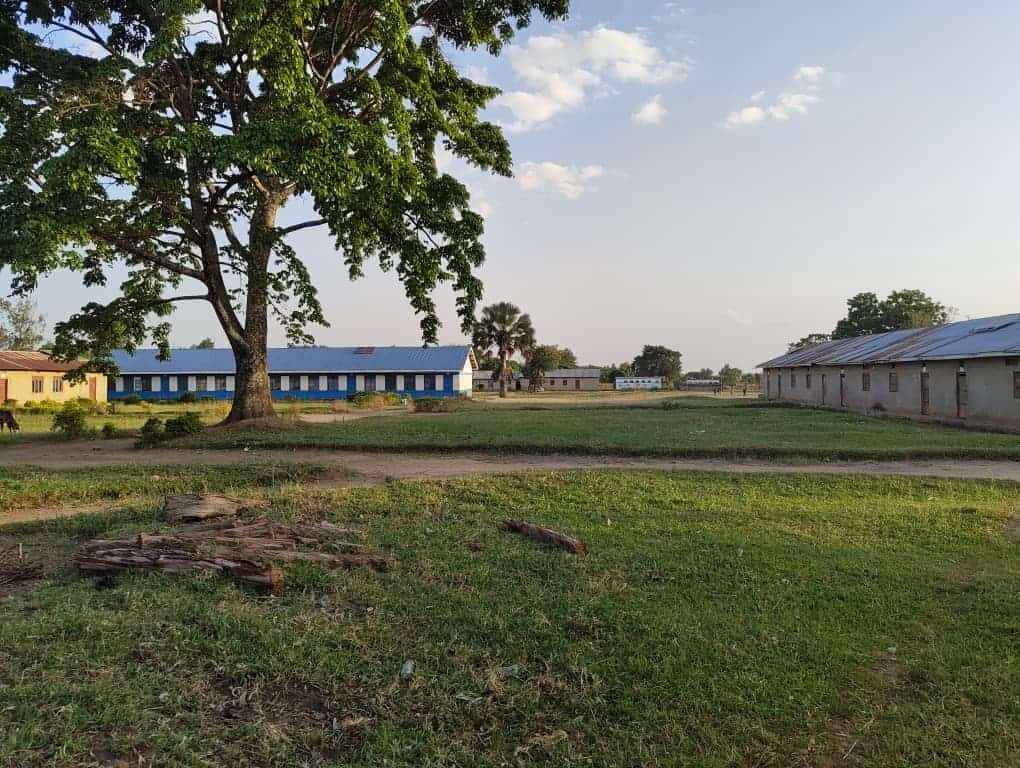
One of my earliest childhood memories is of an old, tall mango tree which had giant green leaves that shaped its sprawling and majestic canopy. It towered above all the other trees in the vicinity. Its canopy cast a deep, cool shade dappled with sunlight.
The shade of that tree was an elementary school, an open-air classroom where a blackboard was mounted on a rickety easel and made to lean against the tree trunk facing its audience – elementary school kids, almost all barefoot, seated on sandy, bare ground, following the teacher’s explanations and inscriptions on the board. The sandy, bare ground that students sat on also acted as a notebook of sorts where, with short sticks as writing tools, students would practice writing out basic numbers for Math class and letters of the English alphabet for reading and writing class.
Yes, I was one of the many students in that open-air classroom. A far cry from my professional career as a High School teacher and curriculum developer in New York City. That was the start of my formal education in Uganda, East Africa. It was a beginning that was not isolated, but similar to many other children’s beginnings across the country and the East African region, marked by a lack of proper education facilities and infrastructure.
As I progressed through the Ugandan education system from elementary school to secondary school and then to college, I kept on noticing a similar pattern of desolation in relation to educational facilities and infrastructures, which negatively impacted not only student academic success, safety, and health, but also teachers’ motivation. Experiencing such a system firsthand and overcoming it led to deep introspection, which inspired me to want to do something about it and make the situation better for learners across all age groups who are in a similar situation.
That mango tree shade and the tree itself that was my classroom, is forever a part of my academic identity. It instilled in me a resilience to persevere to learn even in the direst circumstances. It also laid down the foundation for my appreciation of trees, the environment, nature, and agriculture. This made it hard for me to ignore the rampant deforestation for timber, fuel, and land expansion. This, along with poor agricultural practices, poverty, and the phenomena of climate change, kindled in me a passion to be a part of addressing limited access to quality education, educational inequity, poor agricultural practices, climate instability, and poverty.
The African proverb, “If you want to go fast, go alone. If you want to go far, go together,” highlights the value of collaboration and teamwork over solo effort, suggesting that while individual effort can yield quick results, long term success and enduring achievements are best reached through collective effort. Inspired by this principle, I reached out to individuals with whom I share a strong passion for expanding access to quality education, promoting educational equity, supporting sustainable agriculture, adapting to and combating climate change, and alleviating poverty. This led to the founding of our nonprofit Tropics International Ltd, with the mission to empower communities in New York and Uganda to expand access to quality education, promote educational equity, engage in sustainable agriculture, adapt to and combat climate change, and alleviate poverty. We achieve this through innovative programs, community-driven solutions, and strategic partnerships that build stronger, more resilient communities. In the spirit of collaboration and effort, which is at the center of the founding of this nonprofit, you are all welcome to join us on this journey and mission of bringing about change.
Where does our organization fit in the effort to foster knowledge and build stronger, more resilient communities?
Our role is to serve as a collaborative partner that brings people, ideas, and resources together so that communities can move forward sustainably. In regions where progress depends on access to knowledge, resources, opportunity, and voice, we act as the catalyst that turns these needs into reality. This role is grounded in Ubuntu, an African philosophy meaning “I am because we are,” which recognizes our shared humanity and affirms that lasting change must grow from shared responsibility.
As a nonprofit organization, we address the reality that rural and underserved communities often face overlapping challenges at the nexus of limited access to quality education, educational inequity, poor agricultural practices, climate instability, and poverty, while operating within narrow support systems. Our role is to facilitate holistic approaches that honor local knowledge and empower collective effort. Addressing these interconnected challenges in an integrated manner rather than in isolation ensures that progress in one area reinforces and sustains progress across the whole. Moreover, by championing solutions shaped by local knowledge, we help ensure that the path forward is both community-led and sustainably integrated.
Areas of Impact
Education & Scholarships
The organization supports education & scholarships through a comprehensive strategy focused on resource provision, direct student support, professional development, policy advocacy, and research. This involves distributing essential educational resources like books and technology to underserved schools. We also support students directly by offering tutoring, mentoring, after-school programs, and crucial financial aid through scholarships and college access support. To bolster the education system from within, we train and support teachers via professional development, certification programs, and providing classroom materials. Furthermore, we advocate for policy change, working on education reform at all levels and promoting equity to close racial and income-based achievement gaps. Underlying all our work is the commitment to conduct research to evaluate school performance and curriculum effectiveness, ensuring we study and share findings about what truly works in education with educators and policymakers.
Sustainable Agriculture
We support farmers in adopting sustainable, climate-smart practices that improve productivity while protecting the land. By promoting organic farming, agroecology, and improved access to markets, we help strengthen local food systems and protect biodiversity for future generations. Crucially, these efforts are designed to ensure long-term food security by eliminating the “dormancy trap” of seasonal production and reversing climate-driven productivity declines , ensuring that nutrient-dense produce remains accessible and reliable for the communities we serve.
Climate Change
In addressing climate change, we support community-led adaptation and mitigation initiatives. Our work includes promoting renewable energy, responsible waste management, sustainable land use, and environmental awareness. These efforts help communities build resilience while caring for the ecosystems they depend on.
Development Partnerships, Research, and Policy Engagement
Across all our programs, we collaborate with governments, NGOs, and the private sector to advance shared development goals. As a nonprofit, we serve as a collaborative partner that strengthens partnerships, supports local leadership, and ensures that efforts are aligned for greater impact.
Guided by the spirit of Ubuntu, we believe that progress is strongest when it is shared. When communities grow together, everyone benefits.
How We Work
Our approach is rooted in partnership, respect, and shared responsibility. Guided by the spirit of Ubuntu, we believe meaningful change happens when communities are active participants in shaping their own futures.
We begin by listening. We work closely with community members, local leaders, and grassroots organizations to understand priorities, challenges, and existing strengths. This ensures that every initiative reflects local knowledge and responds to real needs.
We design programs that connect education access and equity, sustainable agriculture, climate resilience, and economic opportunity, recognizing that progress in one area reinforces the others. From supporting climate-smart farming to expanding access to quality education and promoting educational equity, our work advances practical, sustainable solutions that address these interconnected challenges as a whole.
Collaboration is central to how we operate. We partner with governments, NGOs, academic institutions, and the private sector to share expertise, align resources, and scale impact responsibly. By working together, we strengthen systems rather than duplicate efforts.
We also prioritize learning and accountability. We track progress, measure outcomes, and adapt our programs based on evidence and community feedback. This helps ensure our work remains effective, transparent, and responsive over time.
Above all, we are committed to building local capacity. By investing in skills, leadership, and long-term resilience, we support communities in driving their own development long after a project ends.
Learn more about our programs, partnerships, and impact, and discover how collective action can create lasting change.
Diversity, Equity, and Inclusion (DEI)
Our organization is fundamentally driven by the philosophy of Ubuntu—the belief in a universal bond of sharing that connects all humanity—which forms the foundation of our commitment to Diversity, Equity, and Inclusion (DEI). We recognize that true, enduring success in our mission areas can only be achieved by embracing and empowering all individuals and perspectives.
Our Commitment to DEI
- Diversity of Perspective and Lived Experience: We actively seek out and celebrate diversity in all its forms, including differences in race, ethnicity, gender, socio-economic background, physical ability, and, crucially, lived experience. Our leadership is shaped by perspectives from both rural Uganda and urban New York, allowing us to implement solutions that are culturally resonant and locally specific.
- Equity as an Operating Principle: We define equity as working to ensure everyone has access to the resources and opportunities necessary to reach their full potential. We recognize that challenges like education equity and access, food security, climate resilience, and economic opportunity are closely linked. Meaningful change requires integrated approaches that recognize these connections, ensuring that progress in one area reinforces success in others.
- Inclusion in Practice: We are committed to fostering an inclusive environment where every employee, partner, and community member feels respected, supported, and valued. We prioritize local leadership and community participation in the design and implementation of our programs, ensuring that the voices of those we serve are central to the decision-making process.
- Mission Integration: Our DEI commitment is not a separate initiative; it is the core driver of our work in education equity, sustainable agriculture, and improving livelihoods to combat poverty. By ensuring fairness and access, we maximize the impact and sustainability of every project we undertake.
Help us build a future filled with hope and opportunities
Sign up for our newsletter
Frequently Asked Questions
See all of our frequently asked questions on our FAQ page.
How is your organization funded?
We maintain a diversified funding base from institutional and foundation grants, government and multilateral partnerships, private sector contributions (CSR), and individual donations. This diversification ensures our financial stability and our commitment to independence (Refer to “Our Funding” for a detailed breakdown).
How can I get involved or support your work?
There are many ways to partner with us, including:
- Donating to support our programs (see our “Our Funding” section).
- Volunteering your expertise (where applicable).
- Partnering as an NGO or private sector entity on a specific project.
- Advocating for the needs of rural and under served communities.
How do you work with other organizations?
Our role is to serve as a collaborative partner: We collaborate extensively with governments, NGOs, and the private sector to advance shared development goals. We strengthen these partnerships, support local leadership, and ensure efforts are aligned for greater impact.
Why do you focus on connecting multiple program areas?
We recognize that challenges like limited access to quality education, educational inequity, poor agricultural practices, climate instability, and poverty are closely linked. Meaningful change requires integrated approaches that recognize these connections, ensuring that progress in one area reinforces and sustains progress across the whole.
What kind of educational support do you provide?
We provide comprehensive educational support by focusing on five key areas: first, providing educational resources through distributing essential items like books, school supplies, or technology; second, supporting students directly via offerings such as tutoring, mentoring, scholarships, and college access aid; third, training and supporting teachers using professional development and curriculum resources; fourth, advocating for policy change, which involves working on education reform at all levels to promote equity and access; and finally, conducting research to study effective educational practices, evaluate program effectiveness, and share findings with educators and policymakers.
What role do you play in addressing climate change?
We support community-led adaptation and mitigation initiatives. Our projects include promoting renewable energy, responsible waste management, sustainable land use, and environmental awareness, helping communities build resilience against climate impacts.
How does your work address food security?
Our approach to food security is rooted in the principle of Ubuntu, focusing on the transition from “what is” to “what can be” by strengthening local food systems and economic resilience through four primary pillars:
- Regenerative Agriculture Scaling: We restore soil health and biodiversity by implementing a “Triple-Win Framework” of minimum tillage, cover cropping, and crop rotation. These practices sequester carbon and increase water retention, effectively reversing climate-driven productivity declines.
- Year-Round Urban Production: We eliminate “seasonal dormancy” in urban areas by installing greenhouses and hoop houses. By integrating Controlled Environment Agriculture (CEA) like hydroponics and aeroponics, we ensure communities have year-round access to nutrient-dense produce.
- Sustainable Mechanization: We help farmers move from manual labor to engine power through shared tractor services and precision irrigation. This modernization increases land efficiency and reduces the physical drudgery that often drives youth away from farming.
- Agricultural Capacity Building: We provide direct technical support and farmer training to build circular bioeconomies. This strengthens local value chains and reduces dependence on expensive synthetic fertilizers, making local food systems more self-sufficient.
How do you ensure your solutions are sustainable?
We believe in supporting solutions that are shaped by local knowledge and collective effort. By focusing on building local capacity, fostering partnerships, and promoting practices like agroecology, we help ensure that progress is sustained by the community long after our direct involvement concludes.
What types of communities do you serve?
We focus on rural and underserved communities across multiple regions. These communities often face overlapping challenges in education, agriculture, climate resilience, and economic opportunity with limited local support.
What is the core philosophy guiding your work?
Our work is deeply rooted in Ubuntu, an African philosophy meaning “I am because we are.” This philosophy reflects our belief that our lives are interconnected in the context of our shared humanity, and lasting, meaningful change grows from shared responsibility, community, and respect for our common humanity.