
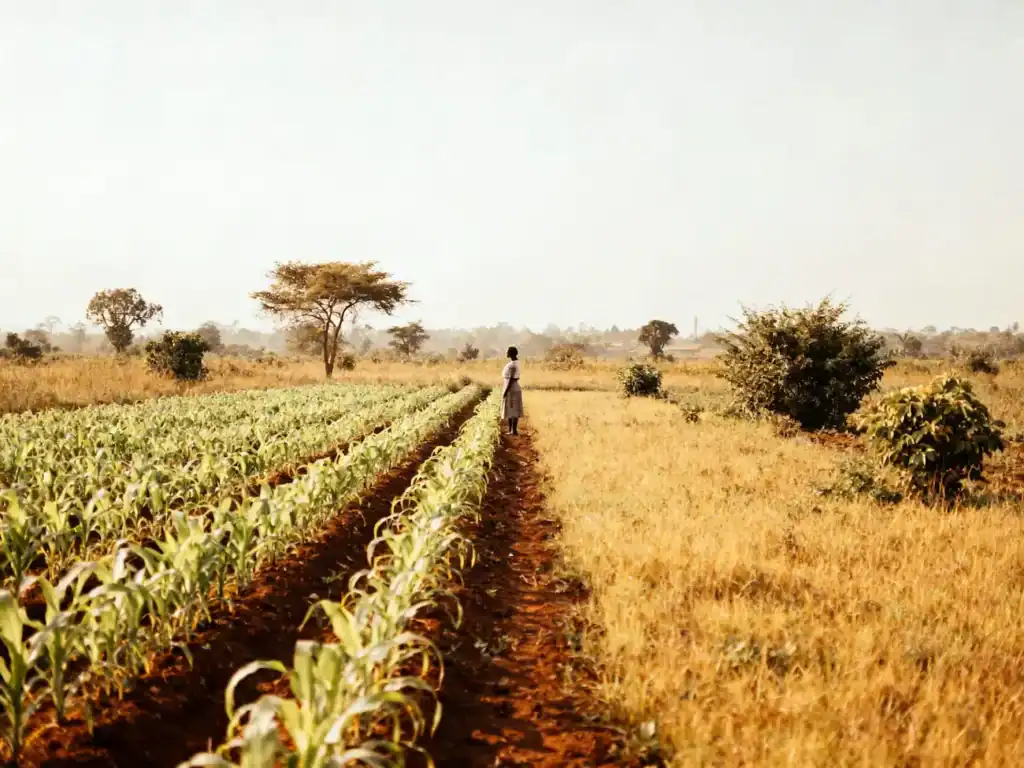
Cultivating Resilience: Transforming African Agriculture from Survival to Sustainability
At Tropics International Ltd, we believe that agriculture is more than just a sector—it is the heartbeat of community survival and the foundation of a sustainable future. Guided by the philosophy of Ubuntu—”I am because we are”—we recognize that food security in Uganda is inextricably linked to the prosperity of the entire East African region. Today, we examine the urgent need for a transition toward regenerative practices and mechanized agroecology to combat the rising tide of hunger.
1. The Core Insights
The State of Hunger (via WFP & FAO)
The 2026 Global Outlook from the World Food Programme (WFP) paints a sobering picture: an estimated 318 million people are facing acute hunger worldwide, with East Africa remaining one of the most vulnerable regions. In Uganda, while the country often serves as a regional food basket, the WFP warns that systemic shocks—ranging from climate unpredictability to the lingering effects of global supply chain disruptions—threaten the stability of local food systems. Across the Horn of Africa, “hidden hunger” (micronutrient deficiencies) is stunting economic growth and perpetuating cycles of poverty for millions.
The Path to Productivity (via World Bank & Frontiers)
Recent research indicates that African agricultural productivity has dropped by 34% since 1961 due to climate change—a decline steeper than any other region. However, the World Bank and FAO highlight a “triple-win” framework:
Regenerative Agriculture: Practices like minimum tillage and cover cropping can sequester carbon and restore the 25% of global biodiversity hosted in our soil.
Agroecology: By centering farmers in the design process and honoring local knowledge, communities can build systems that are naturally resilient to pests and droughts.
Sustainable Mechanization: Moving from human muscle to engine power (tractors and irrigation) allows smallholder farmers to cultivate more land efficiently, reducing the drudgery that often drives youth away from farming and into urban poverty.
2. The Tropics International Lens
At Tropics International Ltd, we see food insecurity not just as a lack of food, but as a lack of access, opportunity, and voice. In Uganda and beyond, rural communities face a “nexus” of overlapping challenges: soil degradation leads to low yields, which leads to poverty, which prevents investment in better tools. To break this cycle, we must stop treating agriculture as a series of isolated tasks and start viewing it as a holistic ecosystem.
Our role as a catalyst is to bridge the gap between “what is” and “what can be.” When we support a smallholder farmer in adopting climate-smart practices, we aren’t just helping them grow maize; we are protecting the land for future generations. By integrating mechanized commercial farming with sustainable organic practices, we ensure that progress in productivity reinforces success in environmental preservation. We don’t believe in “copy-paste” solutions; we believe in solutions shaped by local knowledge and empowered by modern technology.
3. Actionable Advice
To ensure a food-secure and sustainable future, we advocate for these community-led shifts:
Invest in Soil Health: Farmers should transition to regenerative methods like crop rotation and biochar application to revitalize “tired” soil and improve water retention.
Embrace Sustainable Mechanization: We must facilitate access to low-cost, shared tractor services and precision irrigation to help smallholders scale their production without increasing their environmental footprint.
Strengthen Local Value Chains: By adopting agroecology, communities can reduce their dependence on expensive external inputs (like synthetic fertilizers) and instead build circular bioeconomies that keep resources—and profits—within the community.
4. The Sources
World Food Programme: Uganda Country Strategic Plan 2026-2030
FAO/WFP: Hunger Hotspots Early Warning Report (2025-2026)
World Bank: Food Security Update and the Role of Agriculture
Frontiers in Environmental Economics: The Nexus Between Climate Change, Poverty, and Food Security
“When communities grow together, everyone benefits.” Join us in our mission to turn agricultural potential into a reality of abundance.